When I first met Geoffrey Soloway at MindWell House, I could barely speak. All I could get out of my mouth was: you built my vision. He chuckled and so did I. We’d barely met and yet it all felt so familiar.
Rather listen?
Of course it was his vision. And also mine, colliding in that uncanny way that visions sometimes do.
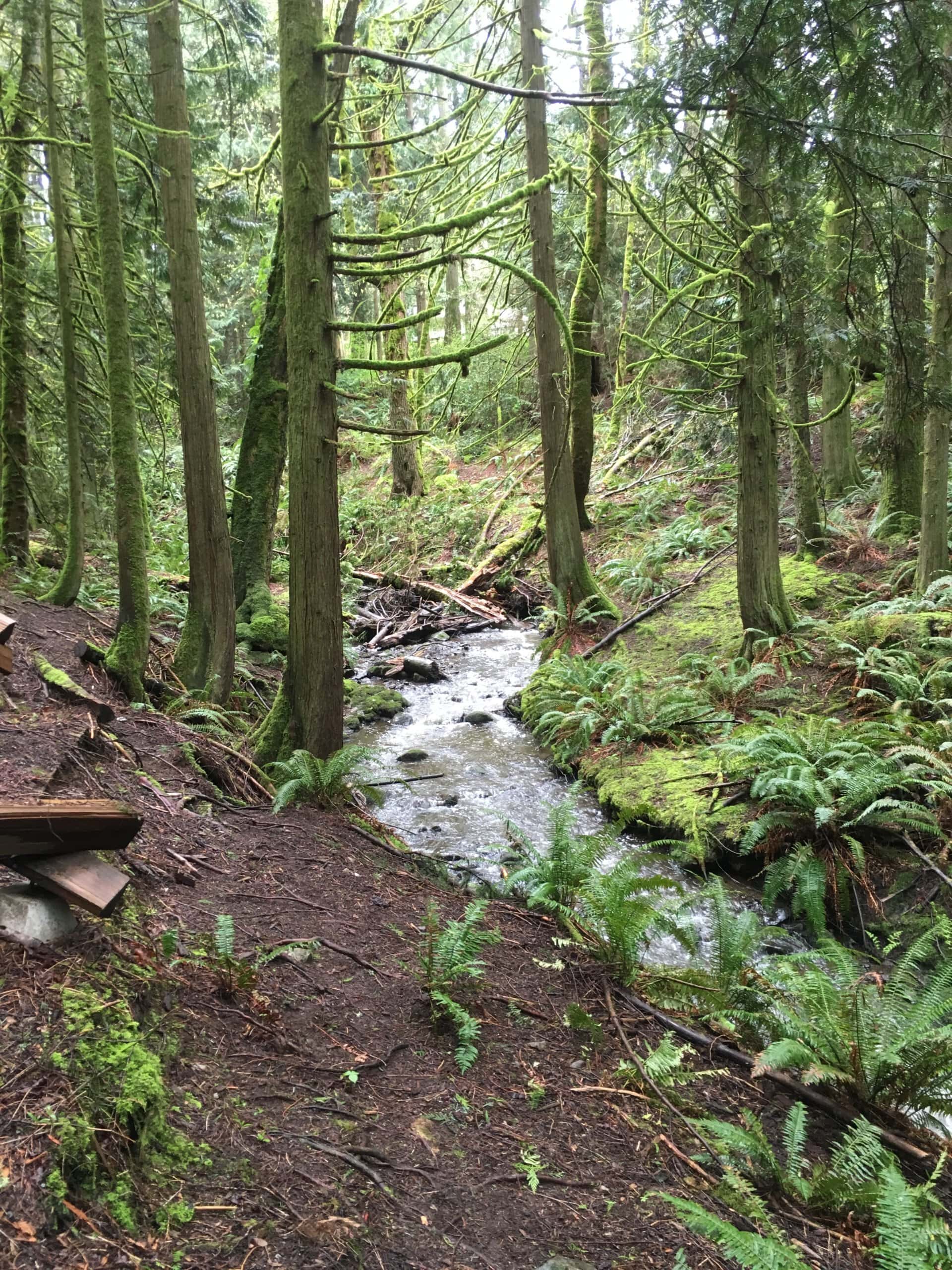
As I took in the cotton candy fir tree smells of spring, gazed at the giant cedars gathered around me like wise elders joined arm in arm, and then entered the house, my eyes took in every detail, a different view of the forest from every room. I felt it immediately. Lightness. Openness. Access to possibility. I imagined my programs there, the living room when connection is all we need, the spaciousness of the yoga studio for somatic process work, the invitation sitting quietly in each room.
I’ve held a vision of a place just like MindWell House for many years. Somewhere to bring clients and groups. To be in nature together. To do the kind of work that a boardroom simply cannot hold.
This isn’t new for me. It began in San Diego in 2003, during my earliest coach training, when I first understood what it meant to work with the body, not just the mind. I walked beaches with clients there and along the BC coast. We hiked and climbed forest trails. We used pebbles and sand to work through what words alone couldn’t reach. There’s something that happens when your hands are in the earth or your feet are on uneven ground. The body gets involved in a way it never does sitting across a boardroom table. Nature has always been part of how I work and play.
MindWell House brought that back. And then some.
Because some work can’t happen in a boardroom.
There’s a philosophy that shapes how I work. It holds that who we are shows up in three places at once: the language we use, the emotions we carry, and the body we live in. Not separately. Always together.
Think about this. The reason the founder’s daughter can’t step into her authority during a meeting in the boardroom of her father’s 30-year company isn’t just a mindset problem. It’s in her body. It’s a pattern she learned before she had words for it. And it won’t shift from insight alone.
If the environment feels familiar, the nervous system stays in its habitual patterns. You think the same thoughts, feel the same feelings, and come to the same conclusions you always do. The room itself becomes part of what’s keeping you stuck.
MindWell asks something different of you.
It’s a boutique ten-acre sanctuary, thirty minutes from YYJ, set among mossy rock and towering cedars. There’s a live edge table for the hard conversations, a plush sofa for the ones that need more softness, a sauna where you sit elbow to elbow before stepping into an icy waterfall, and a thermal experience that starts doing the physiological work before the conversation even begins.
Here’s what I mean by that. When you sit in the sauna, your core temperature rises, your heart rate increases, blood vessels dilate. Your body is working hard even though you’re sitting still. More importantly, heat exposure shifts you out of sympathetic dominance, the chronic fight or flight state most leaders are running on, and activates the parasympathetic system. Your nervous system downregulates. Things that felt urgent stop feeling urgent. The body stops bracing.
Cortisol drops. A calm, clear feeling settles in. And research suggests the brain becomes more receptive to new patterns, literally more open to change.
Then comes the cold. Contrast therapy produces a sharp reset, improved mood, reduced inflammation, and a kind of mental clarity that’s hard to describe but very easy to feel.
A client who has just done a thermal experience is physiologically different from a client who walked out of a board meeting. Their nervous system is open in a way it probably hasn’t been all week. That’s not spa talk. That’s biology.
And that’s where our work can actually begin.
I’ll be running my own groups and programs at Mindwell House bringing the somatic and ontological work I do into a container that was built for it.
This isn’t a retreat. It’s a therapeutic intervention that works at the level of the body, not the agenda.
It’s about finally having a place that matches the depth of the work I do.
If you lead an organization and you’ve been thinking about an offsite, I want you to consider what might shift if we facilitated it in a space such as Mindwell House because your team deserves a container that actually matches what you’re asking of them. Let’s explore what that could look like.
And if what you’re carrying right now is heavier than strategy, if it’s anxiety, burnout, or a kind of tiredness that a weekend away hasn’t touched, that’s exactly what I built my group work for. Let’s talk about whether it’s the right fit for you or your team.
The cedars are waiting.
Team Offsites: Facilitated Space for Leaders and Their Teams
Growth and change put real strain on a team — and a change of scenery alone doesn’t resolve it. Tracey Burns facilitates offsites and group sessions that help leadership teams build alignment, work through what’s underneath the tension, and reconnect with why the work matters.
Offsite and group facilitation:
- Team alignment and shared direction
- Processing burnout, tension, and unspoken friction
- Building trust across leadership teams
- Creating space for honest, values-driven conversation
- Sustaining energy and connection under pressure
A team that feels genuinely supported shows up differently. Book a session to explore what a facilitated offsite could look like for your team.